 £0
£0 Free delivery to UK mainland. Other areas may have additional costs. We have local agents covering Northern Ireland & Eire. Please contact us for more details.
 Sitewide Search
Products
- Discount Offers
- Stainless steel pickling pastes
 13 items
Pickling pastes are only used after welding for th... - Stainless steel cleaning and maintenance
 8 items
Products in this section are for removal of Iron (... - Weld Cleaning and Marking machines
 16 items
Electro-chemical machines for the fast removal of ... - Stainless Steel Identification and Test kits
 8 items
ELECTRO-CHEMICAL TESTING EQUIPMENT for alloy ident... - Non Destructive Testing products (NDT)
 12 items
Quality Non-destructive testing products for liqui... - Aluminium cleaners
 3 items
We have developed a range of products designed to ... - General Metal cleaning and maintenance products
 5 items
Aluminium, Copper, Nickel, Steel & Stainless S... - Dry Ice Cleaning
 7 items
Innovative cleaning system for fast removal of sur... - Tungsten welding electrodes (TIG)
 1 items
High quality, European manufactured, tungsten elec... - Tungsten electrode grinders (TIG)
 4 items
A range of grinders for sharpening tungsten electr... - Specialised Welding and Fabrication products
 3 items
A range of products which are designed to assist f... - Metal powder spraying torch
 1 items
Torches & powders for build up and repair of metal... - Silver and Copper brazing alloys
 4 items
High quality, European manufactured, brazing alloy... - Material Safety Data Sheets
 1 items
MSDS for our products. Unfortunately we are unabl...
Articles / News
- 21 Jun 2023
Passivation of Stainless Steel - 20 Jun 2023
How to chose a weld cleaning machine - 19 Jun 2023
Pickling of Stainless Steels - RSS Feed

- More >>>
More Info
Subscribe
Ferroxyl Test for Free Ironposted on 18 June 2023 | posted in Stainless steel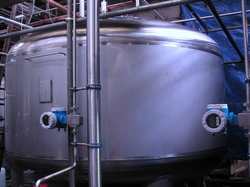 We have introduced a new kit for the Ferroxyl Test for Free Iron, outlined in ASTM A380-13, section 7.3.4 & A967-13 Practice E.
 It is a very highly sensitive & hazardous test and should be used only when traces of free iron or iron oxide is "objectionable". Personnel familiar with its limitations and hazards should only be permitted to use this test method. It consists of two solutions, A & B, which contain nitric acid and potassium ferricyanide. The potassium ferricyanide can emit lethal fumes if it is exposed to concentrated acids, or heated to decomposition. The solutions are combined before use as the mixture has an active shelf-life of approximately 24 hours. A filter paper is soaked with equal amounts of each solution and applied to the surface. The paper turns dark blue within 15 seconds when iron is present. It is not recommended for use on products destined for use in food, medical or pharmaceutical unless complete removal of the cyanide solution can be guaranteed. An alternative is our Copper Sulphate or Passivity test kit which will give a red/pink result when in contact with Iron. The chemicals used in these tests are not hazardous. Carbon steel can cause contamination of the stainless steel even if airborne particles come into contact with the passive layer of chromium oxide. Very few fabricators have the capability to fabricate in a clean room environment. There are many ways to remove free iron and free iron oxides by using for example, Antox 75E ( a phosphoric acid solution) or EWP 51 (Citric acid). A ferroxyl test is a test done only to "detect" contamination. Once contamination is detected, then a removal procedure is carried out.
|
|

|
|
| ||||||
Carriage paid to U.K. mainland except certain Scottish Highland postcodes.
Overseas please contact our office for a quote. | ||||||||


